HSK 1
有 meaning in Chinese
yǒu
Without tone marks: you
Listen to 有
to have, there is
verb
How to use 有
有 expresses having something or the existence of something. 我有一本书 means I have a book; 这里有一本书 means there is a book here. Negate 有 with 没有, rather than 不有.
Everyday examples
我有一个问题。
Wǒ yǒu yí ge wèntí.
I have a question.
我没有时间。
Wǒ méiyǒu shíjiān.
I do not have time.
Dayword examples
Example
太好了。一个缺席的人都没有。
tàihǎole. yī gè quēxí de rén dōu méiyǒu.
Good. No absentees.
English glosses are adapted from CC-CEDICT, used under CC BY-SA 4.0. Example sentences are written by Dayword or taken from Tatoeba contributors under CC BY 2.0 FR, with a link on each Tatoeba sentence.
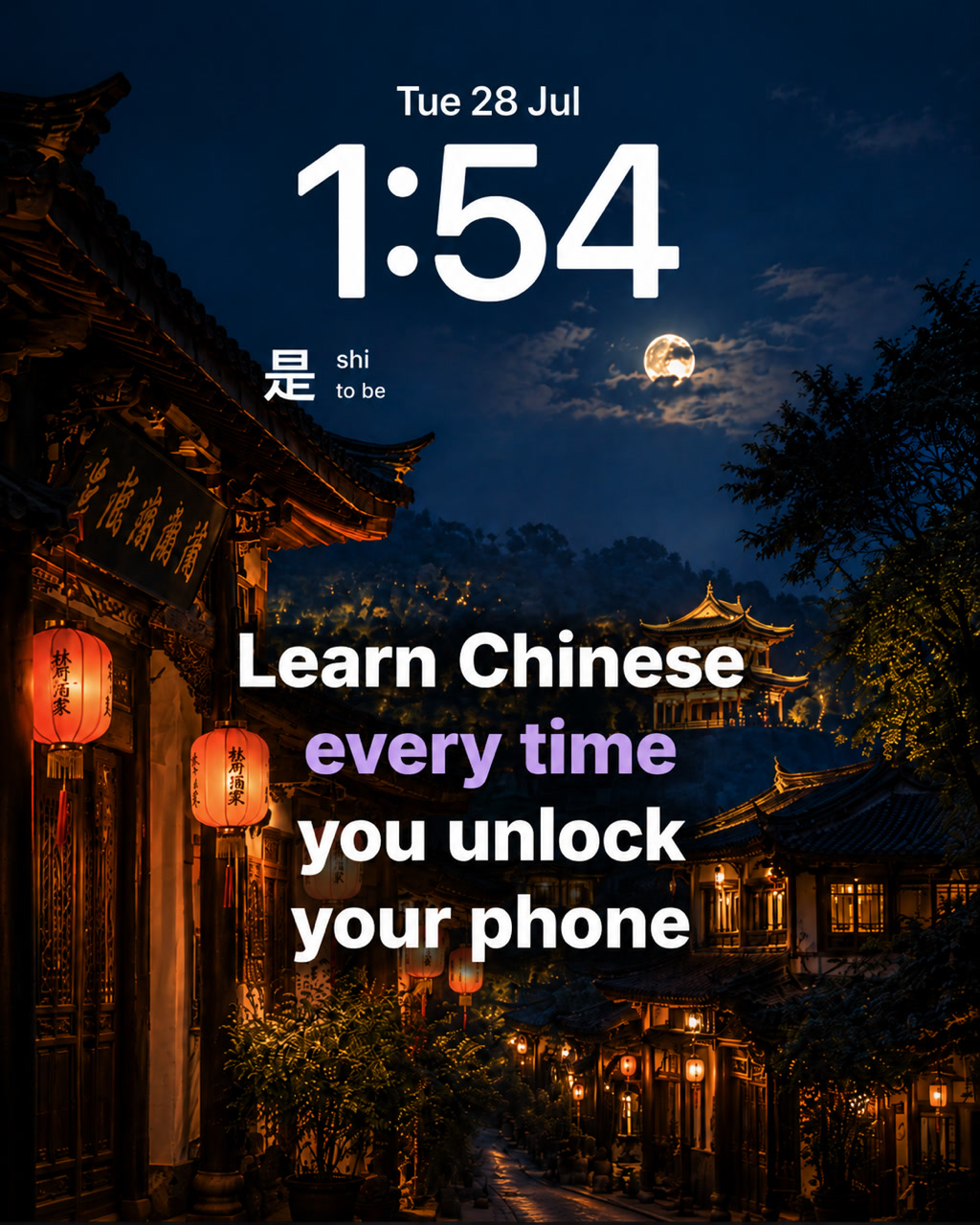
Practice 有 on your Lock Screen
Dayword puts this word under the clock and brings it back when you would forget it.